How I built YouTube, ChatGPT, Facebook, Airbnb, TikTok and Snapchat clones using Claude Code
Six working Next.js apps, designed with Claude and coded and tested with Claude Code. Each one comes with screenshots and an engineering guide, drafted with Claude Opus 5.5, covering the data model, APIs, capacity math, Hetzner server plans, real-time notifications, security and monthly cost at every growth stage.
All SaaS clones
 Source code on GitHubMITYouTube cloneViewly
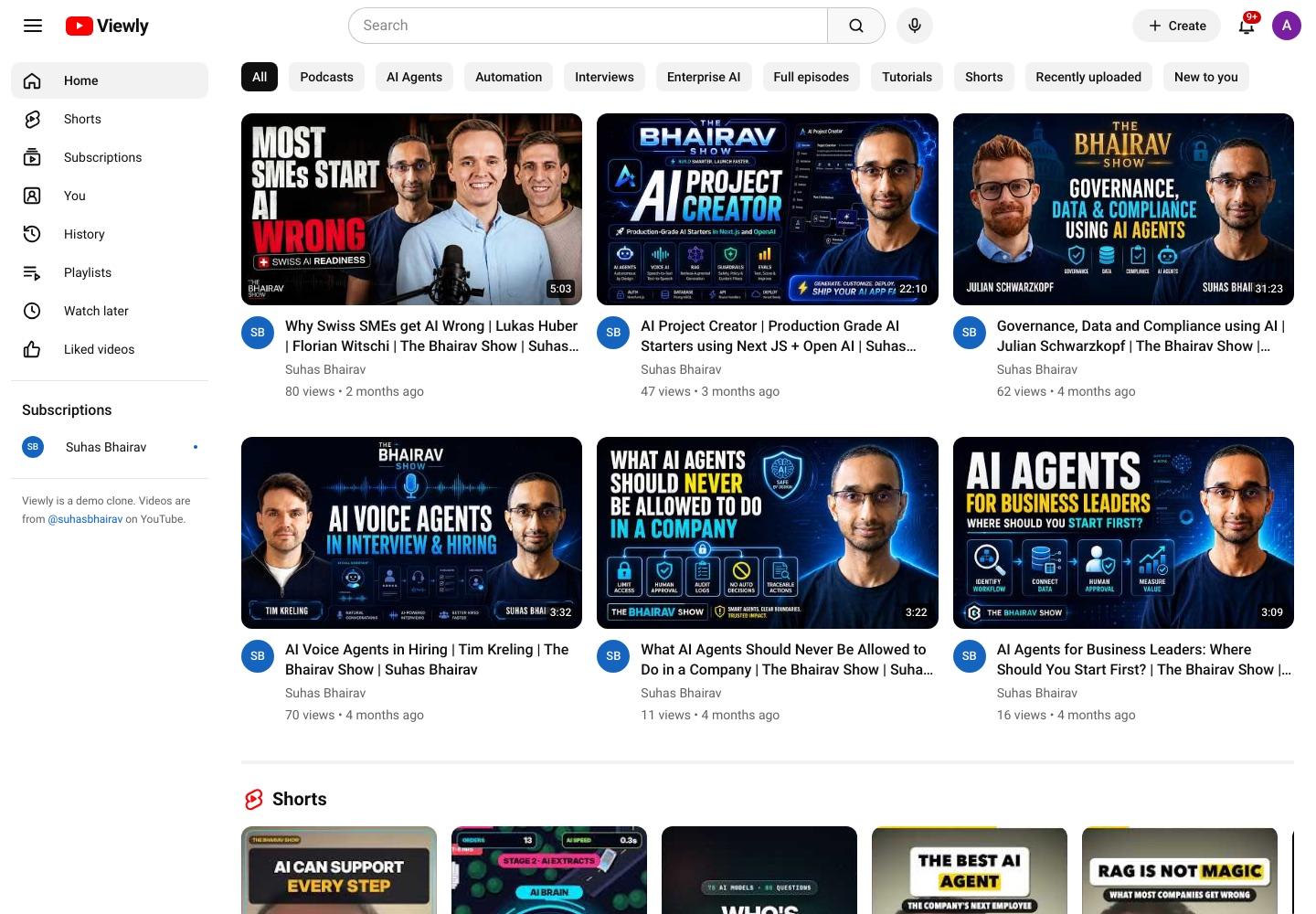
How I Built a YouTube Clone Using Claude Code: Viewly
Viewly is a working YouTube-style video platform clone built with Next.js 16, React 19 and Tailwind v4, using real videos from Suhas Bhairav's channel. This guide covers the build and how to scale it to millions of users: transcoding, HLS/DASH delivery, view counting, realtime and a priced Hetzner deployment.
Built with Claude CodeDesigned with ClaudeAnalysed with Claude Opus 5.5Next.js 16 (App Router, Cache Components)Read the build & scale guide · 53 min read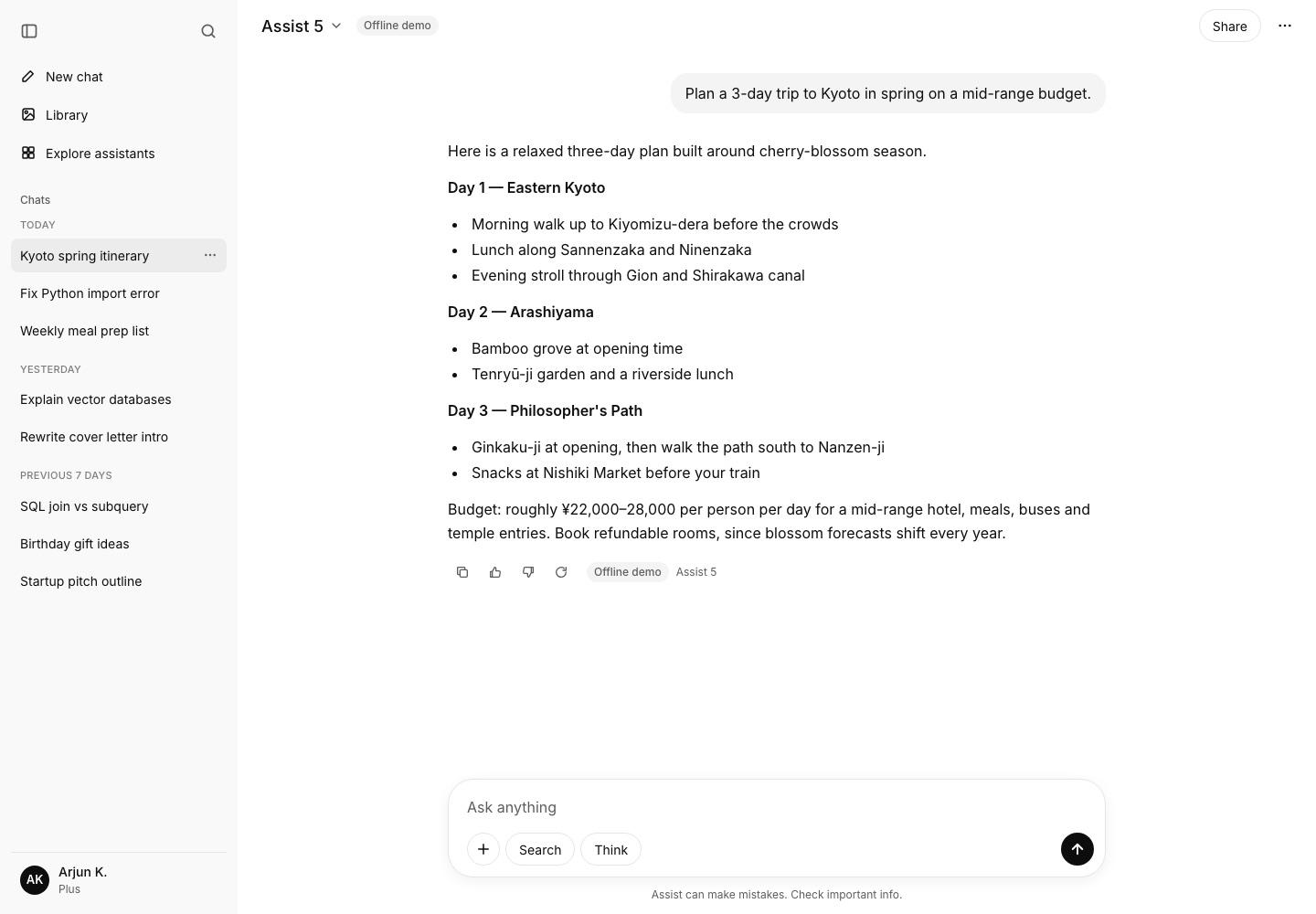 Source code on GitHubMITChatGPT cloneAssist
How I Built a ChatGPT Clone Using Claude Code: Assist
Assist is a working ChatGPT-style clone built with Next.js 16: real token streaming from the Anthropic API (with an offline demo mode), conversations, file context, sharing and preset assistants. The guide shows how to scale it to millions of users with vLLM GPU serving on Hetzner, token metering and resumable streams.
Built with Claude CodeDesigned with ClaudeAnalysed with Claude Opus 5.5Next.js 16 (App Router, Cache Components)Read the build & scale guide · 47 min read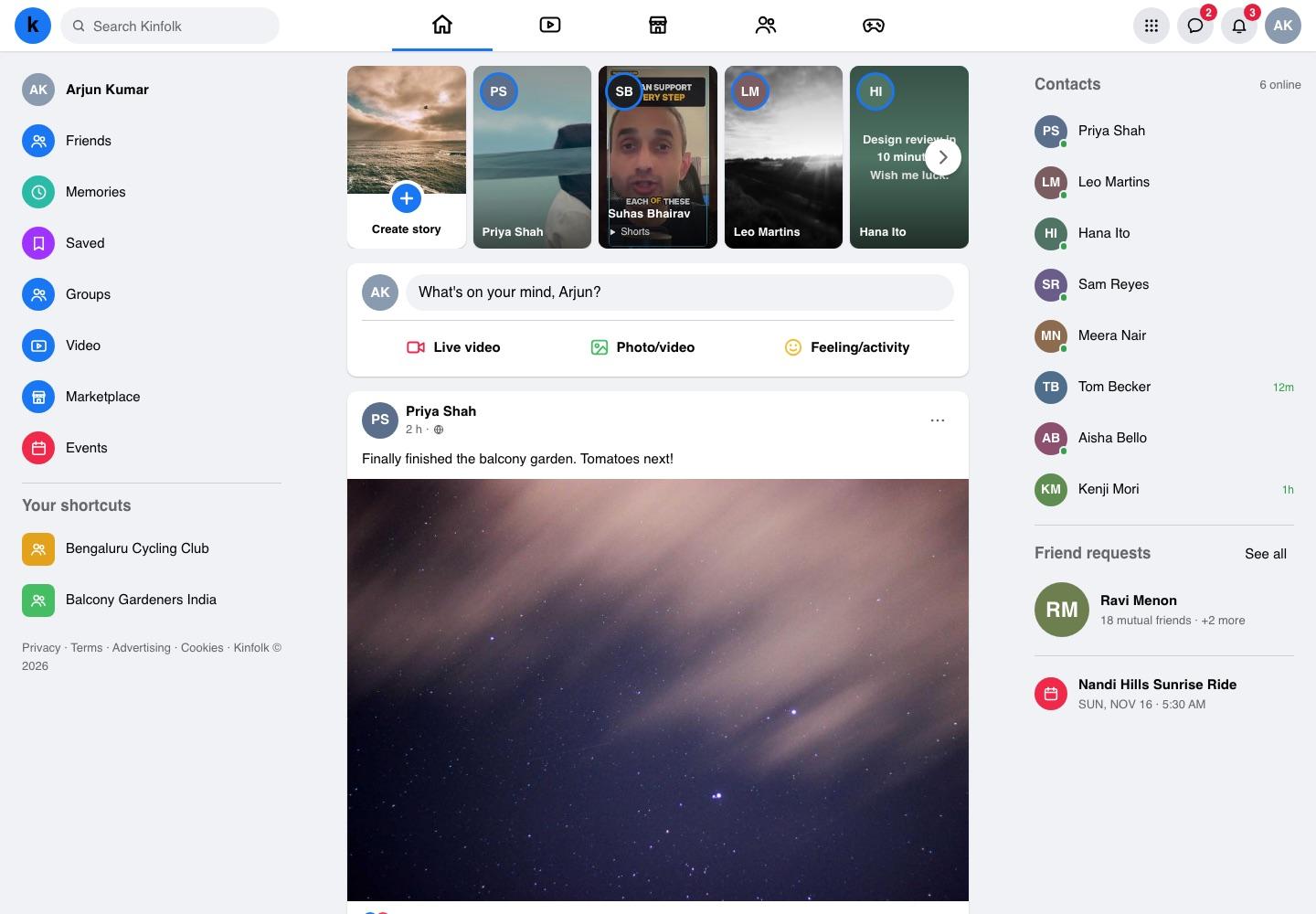 Source code on GitHubMITFacebook cloneKinfolk
How I Built a Facebook Clone Using Claude Code: Kinfolk
Kinfolk is a working Facebook-style social network built with Next.js 16, React 19 and Tailwind CSS v4: news feed, reactions, threaded comments, stories, a composer, docked chat, search and real video posts from The Bhairav Show. This guide explains how to scale it to millions of users with hybrid fanout, feed ranking and a concrete Hetzner deployment.
Built with Claude CodeDesigned with ClaudeAnalysed with Claude Opus 5.5Next.js 16 (App Router, Cache Components)Read the build & scale guide · 44 min read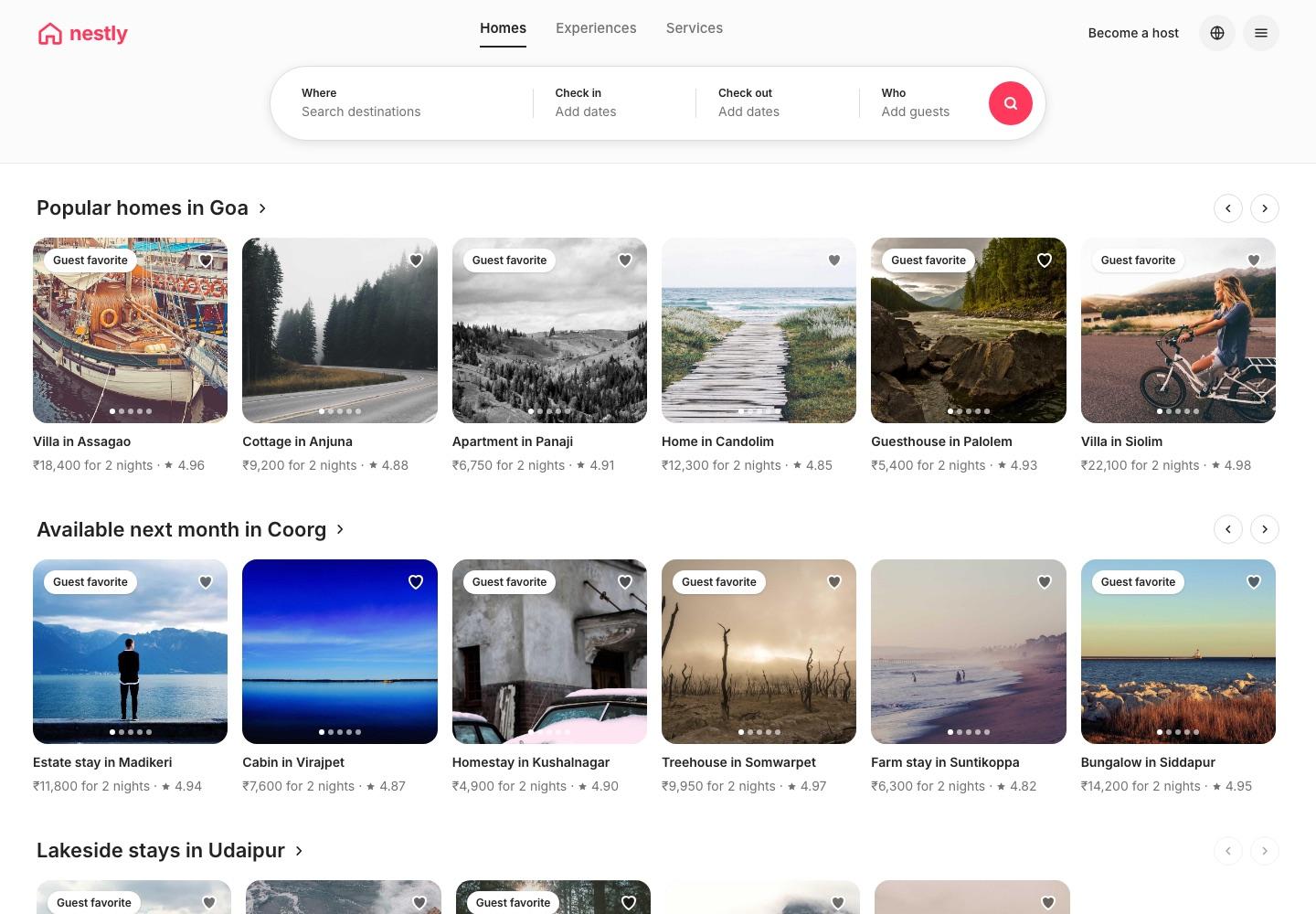 Source code on GitHubMITAirbnb clonenestly
How I Built an Airbnb Clone Using Claude Code: nestly
nestly is a working Airbnb-style stays marketplace built with Next.js 16: date-range search, a lat/lng price-pin map, availability calendars with booked dates, idempotent bookings that return 409 on overlap, a host onboarding flow and INR/USD/EUR pricing. The guide covers scaling it to millions of users on Hetzner.
Built with Claude CodeDesigned with ClaudeAnalysed with Claude Opus 5.5Next.js 16 (App Router, Cache Components)Read the build & scale guide · 46 min read Source code on GitHubMITTikTok cloneLoop
How I Built a TikTok Clone Using Claude Code: Loop
Loop is a TikTok-style short-video app built with Next.js 16, React 19 and Tailwind v4. It plays Suhas Bhairav's YouTube Shorts in a snap-scrolling For You feed with likes, comments, sharing, live, camera uploads and DMs. This guide also covers the recommender, HLS upload pipeline, realtime layer and Hetzner deployment needed for millions of users.
Built with Claude CodeDesigned with ClaudeAnalysed with Claude Opus 5.5Next.js 16 (App Router, Cache Components)Read the build & scale guide · 48 min read Source code on GitHubMITSnapchat cloneGlint
How I Built a Snapchat Clone Using Claude Code: Glint
Glint is a working Snapchat clone built with Next.js 16: disappearing Snaps with delivery and open receipts, live camera lenses, streaks, stories, a Spotlight feed and a friend map. This guide shows how to take it to millions of users with E2E encryption, guaranteed media deletion and a WebSocket tier on Hetzner.
Built with Claude CodeDesigned with ClaudeAnalysed with Claude Opus 5.5Next.js 16 (App Router, Cache Components)Read the build & scale guide · 46 min read
Frequently asked questions
How did you build these clones with Claude Code?
The screens were designed with Claude on a design canvas. Claude Code then wrote one shared brief and started six sub-agents running Claude Opus 5.5, one per clone. Each agent built its Next.js app and API routes, got build and lint passing, ran the app, took and reviewed screenshots, and drafted the scaling plan. Each app took roughly 26 to 34 minutes of agent time, and all six were built at the same time.
What are the SaaS clones by Suhas Bhairav?
They are six working Next.js applications modelled on the product categories of YouTube, ChatGPT, Facebook, Airbnb, TikTok and Snapchat, each with its own original brand. Every clone ships with screenshots and a long-form guide covering the data model, APIs, scaling to millions of users, Hetzner deployment, real-time notifications, security and cost.
Can these clones really scale to millions of users?
The clones themselves are frontend-complete demos with lightweight API routes. Each guide explains the production architecture needed for millions of users: a stateless app tier behind load balancers, PostgreSQL with replicas and partitioning, Valkey caching, a message queue, object storage plus a CDN, and a dedicated real-time gateway, with capacity math for every tier.
Why use Hetzner for hosting a SaaS clone?
Hetzner offers cloud and dedicated servers at a fraction of hyperscaler prices, with large included traffic, built-in DDoS protection and S3-compatible object storage. The guides show which CPX, CCX, AX and GEX servers to use at each growth stage and where Hetzner needs to be paired with a CDN or managed services.
How are real-time notifications implemented in these apps?
Each guide describes a WebSocket or Server-Sent Events gateway behind the load balancer, a pub/sub backplane such as NATS or Valkey for fanout across nodes, and Web Push, APNs and FCM for offline delivery, with reconnection and delivery-guarantee strategies specific to the product.