Quick answer: what is Kalike?
Kalike (ಕಲಿಕೆ, "learning") is an open-weight Kannada large language model created by Suhas Bhairav. It was trained from random weights, not fine-tuned from an English model, on 4.57 billion tokens of cleaned Kannada text with a 32,768-token Kannada-only tokenizer. The flagship d20 model has 435M core parameters, ships as a base model and a chat model under Apache-2.0, and is available on Hugging Face at SuhasBhairav/kalike.
- Created and trained end to end by Suhas Bhairav, released November 17, 2026.
- 100% Kannada: tokenizer, pretraining data and chat data contain no English.
- d20: 20 layers, 435M core parameters (897M including embedding tables), 2,048-token context.
- Scores 42.3% on a new Karnataka government schemes and MSME benchmark, against 25% for random guessing.
- Pretrained on a single rented NVIDIA H100 GPU in about nine hours.
- Open weights under Apache-2.0, with safetensors files and a portable tiktoken tokenizer.
Two sizes, same recipe
Model sizes
Kalike d20
Recommended- Layers · width
- 20 · 1,280
- Core parameters
- 435M
- Total parameters
- 897M
- Training tokens
- 4.57B
- Karnataka schemes
- 42.3%
- Belebele (kn)
- 27.4%
Kalike d16
- Layers · width
- 16 · 1,024
- Core parameters
- 235M
- Total parameters
- 537M
- Training tokens
- 2.82B
- Karnataka schemes
- 39.9%
- Belebele (kn)
- 27.3%
Measured, not claimed
Benchmarks
| Benchmark | Model | Score | Random guess |
|---|---|---|---|
| Karnataka schemes & MSME help (kn)168 four-option questions on Karnataka welfare schemes, MSME support, property and E-Khata, and government departments, each checked against a cited source. | d20 base | 42.3% | 25.0% |
| Belebele (kn)Meta's reading-comprehension benchmark, 900 Kannada questions. | d20 base | 27.4% | 25.0% |
| KN-CORE (centered mean)Average of the benchmarks, rescaled so random guessing is 0 and perfect is 1. | d20 base | 0.131 | 0.0 |
| Validation bits per byteMeasured on held-out Kannada text. | d20 base | 0.312 | lower is better |
Real replies from the d20 chat model
What it writes
ಕರ್ನಾಟಕದ ರಾಜಧಾನಿ ಯಾವುದು?
What is the capital of Karnataka?
ಕರ್ನಾಟಕದ ರಾಜಧಾನಿ ಬೆಂಗಳೂರು.
The capital of Karnataka is Bengaluru.
ಆರೋಗ್ಯವಾಗಿರಲು ಮೂರು ಸಲಹೆಗಳನ್ನು ನೀಡಿ.
Give three tips to stay healthy.
೧. ಸಾಕಷ್ಟು ನೀರು ಕುಡಿಯಿರಿ: ದಿನಕ್ಕೆ ಕನಿಷ್ಠ ೮-೧೦ ಗ್ಲಾಸ್ ನೀರು ಕುಡಿಯಲು ಗುರಿಯನ್ನು ಹೊಂದಿರಿ. ೨. ವ್ಯಾಯಾಮ: ನಿಮ್ಮ ದೇಹವನ್ನು ಸಕ್ರಿಯವಾಗಿರಿಸಲು ಮತ್ತು ನಿಮ್ಮ ಮಾನಸಿಕ ಮತ್ತು ದೈಹಿಕ ಆರೋಗ್ಯವನ್ನು ಬೆಂಬಲಿಸಲು…
1. Drink enough water: aim for at least 8-10 glasses a day. 2. Exercise: to keep your body active and support your mental and physical health…
ಮಕ್ಕಳಿಗಾಗಿ ಒಂದು ಸಣ್ಣ ಕಥೆ ಹೇಳಿ.
Tell a short story for children.
ಒಂದಾನೊಂದು ಕಾಲದಲ್ಲಿ, ದೂರದ ಒಂದು ದೇಶದಲ್ಲಿ, ರೋಹನ್ ಎಂಬ ಯುವಕ ವಾಸಿಸುತ್ತಿದ್ದನು. ರೋಹನ್ ಯಾವಾಗಲೂ ಹೊಸ ವಿಷಯಗಳನ್ನು ಪ್ರಯತ್ನಿಸಲು ಮತ್ತು ಹೊಸ ಜನರನ್ನು ಭೇಟಿಯಾಗಲು ಉತ್ಸುಕರಾಗಿರುತ್ತಾರೆ…
Once upon a time, in a faraway land, there lived a young man named Rohan. Rohan was always eager to try new things and meet new people…
Sampled at temperature 0.6 on a MacBook. English translations added for readers; the model itself writes only Kannada.
Why build a Kannada model from scratch?
Most open models treat Kannada as an afterthought. Their tokenizers are trained mostly on English, so a single Kannada word is often split into many byte-level pieces, which makes the model slower, more expensive and worse at the language. Kalike starts from the other end: the tokenizer, the pretraining corpus and the chat data are all Kannada, and the model learns the language from random weights instead of inheriting an English model's habits.
The goal is a small, honest, fully open baseline for Kannada that anyone can study, run and improve, and a public record of what it takes to train a language model for one Indian language on a modest budget.
The data: 13.5 billion characters of clean Kannada
Kalike's pretraining corpus is published as SuhasBhairav/kannada-llm-base-model-dataset-clean: about 8.9 million documents and 13.5 billion characters from Sangraha (AI4Bharat), FineWeb-2, IndicCorp v2, IITB IndicMonoDoc, Kannada Wikipedia and Kannada Wikisource.
Cleaning was done before any GPU time was spent:
- Only Kannada letters and signs, Kannada digits (೦-೯) and basic punctuation are kept. ASCII numbers are converted to Kannada digits.
- Lines that are mostly another language are dropped whole rather than cut into fragments.
- Exact duplicates and repeated lines are removed, then the corpus is shuffled into parquet shards.
- Every character of the final data was re-checked by a verifier: zero characters outside the allowed set.
Training: one GPU, two model sizes
Kalike uses a training code base inspired by Andrej Karpathy's nanochat, adapted for Kannada by Suhas Bhairav: Kannada-only tokenizer training, Kannada evaluation tasks, resumable checkpoints, automatic data download, and one-command upload of the weights to Hugging Face.
Both sizes were trained back to back on a single rented NVIDIA H100 SXM:
- d16 (16 layers): 5,376 steps over 2.82B tokens, about 3 hours of pretraining.
- d20 (20 layers): 4,357 steps over 4.57B tokens, about 9 hours of pretraining.
Each base model was then fine-tuned into a chat model on Kannada conversations, evaluated, and uploaded automatically.
How to use Kalike
The weights are on Hugging Face at SuhasBhairav/kalike, in two folders: d20/ (recommended) and d16/. Each has a base model, a sft chat model, the tokenizer, evaluation results and full training logs.
Kalike uses nanochat's own architecture rather than a Hugging Face transformers class, so it runs with the Kalike code: download the folder, load model.safetensors, and chat. It runs comfortably on a laptop; on an Apple Silicon MacBook the d20 chat model generates around 50 tokens per second.
The tokenizer is also published as a plain tiktoken file, so Kannada text can be tokenized without any custom code.
Limitations
- Small and young. Kalike writes fluent Kannada but knows relatively little and can state wrong facts confidently. Do not rely on it for advice or anything that matters.
- Kannada only, by design. It cannot read or write English or other scripts, and writes numbers in Kannada digits.
- Chat style. Much of the chat data is machine-translated, so some answers read like translations. The chat models have not been tuned for multiple-choice answers, so they are scored on knowledge through the base model.
- No safety tuning yet. It may reflect biases present in web text.
- Not in Ollama or llama.cpp yet, because its nanochat architecture is not one those runtimes support.
Technical specs
- Architecture
- Decoder-only Transformer (nanochat design): rotary embeddings, QK-norm, ReLU² MLP, value embeddings, logit soft-capping, no biases
- Size (d20)
- 20 layers · width 1,280 · 10 attention heads · 2,048-token context
- Tokenizer
- Byte-level BPE, 32,768 tokens, trained only on Kannada; vowel signs and viramas stay attached, so whole syllables become tokens (about 5 characters per token)
- Pretraining
- 4,357 steps · 1,048,576 tokens per batch · Muon + AdamW · bfloat16 · one NVIDIA H100 SXM
- Chat tuning
- Supervised fine-tuning on the Kannada side of IndicAlign and the Kannada rows of the Aya dataset
- Weights
- PyTorch checkpoints and bfloat16 safetensors; tokenizer as pickle and as a plain tiktoken file
- License
- Weights Apache-2.0 · training code MIT (derived from Andrej Karpathy's nanochat)
Answers about Kalike
Frequently asked questions
What is Kalike?
What is Kalike?
Kalike (ಕಲಿಕೆ) is an open-weight Kannada large language model trained from scratch by Suhas Bhairav. Its tokenizer, training data and chat data are entirely Kannada. It is available as a base model and a chat model on Hugging Face at SuhasBhairav/kalike.
Who created Kalike?
Who created Kalike?
Kalike was created by Suhas Bhairav, a systems architect and applied AI practitioner. He built the Kannada data pipeline, the 168-question Karnataka schemes benchmark and the training setup, and trained the models himself. The training code is inspired by Andrej Karpathy's nanochat.
What does Kalike mean?
What does Kalike mean?
Kalike (ಕಲಿಕೆ) is the Kannada word for learning.
How big is Kalike?
How big is Kalike?
The flagship Kalike d20 has 20 Transformer layers and 435 million core parameters, or 897 million including its embedding tables. A smaller d16 version has 16 layers and 537 million parameters in total. Both have a 2,048-token context window.
Is Kalike fine-tuned from an English model like Llama?
Is Kalike fine-tuned from an English model like Llama?
No. Kalike was trained from random weights. It never saw English during training, and it uses its own 32,768-token tokenizer trained only on Kannada text.
What data was Kalike trained on?
What data was Kalike trained on?
About 8.9 million documents (13.5 billion characters) of cleaned, deduplicated Kannada from Sangraha, FineWeb-2, IndicCorp v2, IITB IndicMonoDoc, Kannada Wikipedia and Kannada Wikisource. The cleaned corpus is public on Hugging Face as SuhasBhairav/kannada-llm-base-model-dataset-clean.
How good is Kalike?
How good is Kalike?
On a new 168-question benchmark about Karnataka government schemes, MSME support and property services, the Kalike d20 base model scores 42.3%, against 25% for random guessing. On Meta's Belebele Kannada reading-comprehension test it scores 27.4%. It writes fluent Kannada and answers simple questions, but it is a small model and can be wrong on facts.
Is Kalike open source? What is the license?
Is Kalike open source? What is the license?
Yes. The weights are released under the Apache-2.0 license, and the training code is MIT-licensed. The cleaned pretraining dataset is public as well, under the licenses of its sources.
How much compute did it take to train Kalike?
How much compute did it take to train Kalike?
Each model was pretrained on a single rented NVIDIA H100 GPU: about 3 hours for d16 and about 9 hours for d20, plus a few minutes of chat fine-tuning each.
Can I run Kalike in Ollama?
Can I run Kalike in Ollama?
Not yet. Kalike uses nanochat's architecture, which Ollama and llama.cpp do not support. It runs with the Kalike Python code from the weights on Hugging Face, including on a laptop.
About the creator
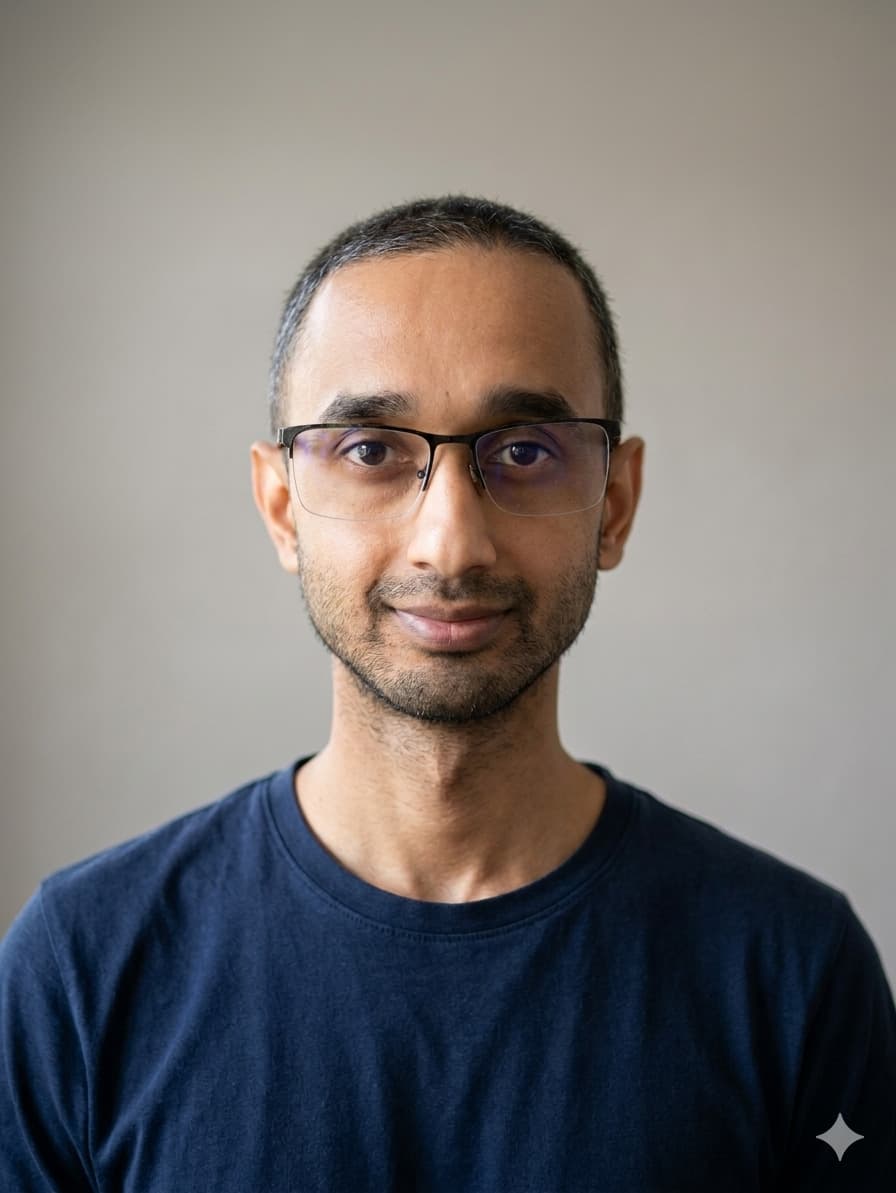
Suhas Bhairav
Systems architect and applied AI practitioner. Suhas created Kalike end to end: the Kannada data pipeline, the tokenizer, the Karnataka schemes benchmark, the training runs and the open release.